
Women’s health · Playa de San Juan
Pelvic floor physiotherapy
Pelvic floor assessment and physiotherapy in Playa de San Juan, Alicante: urinary leakage, pregnancy and postpartum, menopause, pelvic pain, endometriosis and sexual health. We also see men and children. With time, respect and clear language.
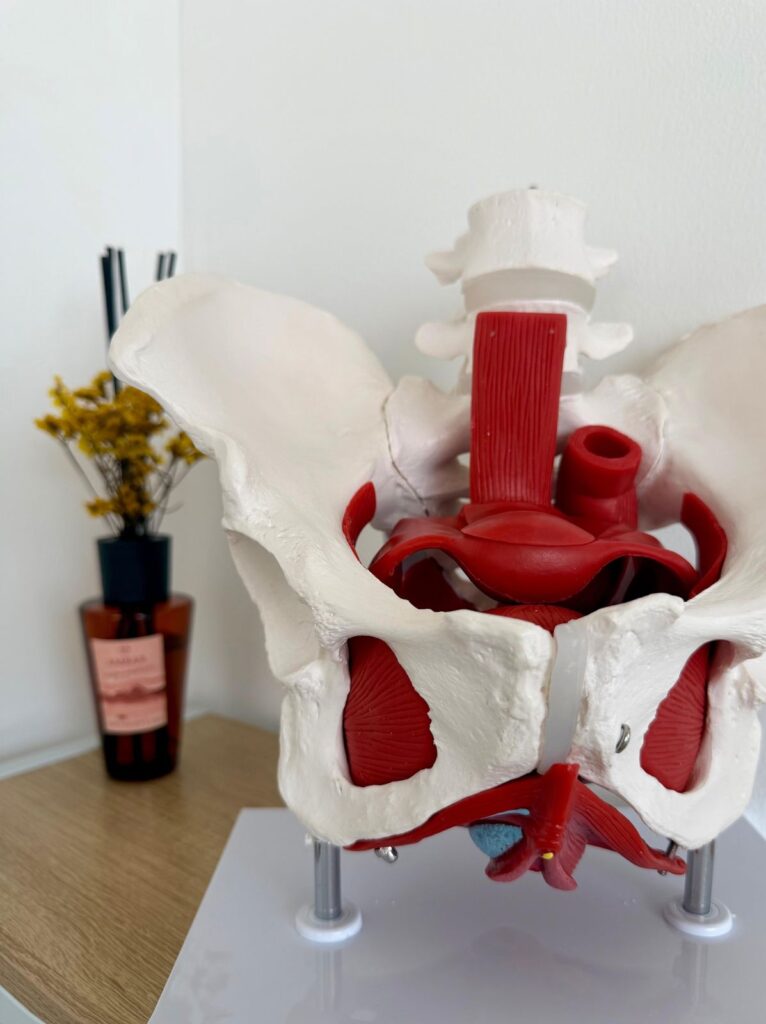
What the pelvic floor is and why it matters
The pelvic floor is the group of muscles and tissues that closes the lower part of the pelvis. It plays a role in continence, sexuality, trunk stability, and pregnancy and birth.
Throughout life it can be affected by pregnancy, childbirth, hormonal changes, surgery, sport or repeated strain. Many of the related symptoms are common, but that does not mean they should be considered normal. Getting it checked is the first step.
Areas
How we can help
Urinary leakage and urgency
Leakage when coughing, laughing, jumping or exercising, sudden or very frequent urges to urinate, and other continence problems.
Pregnancy and birth preparation
Looking after the pelvic floor during pregnancy and preparing the perineum for birth.
Postpartum
Recovery after vaginal or caesarean birth: pelvic floor, abdominal separation (diastasis), C-section scar, tear or episiotomy.
Sexual health
Pain during sex (dyspareunia), vaginismus, discomfort due to dryness or other difficulties in which the pelvic floor may be involved.
Pelvic pain
Persistent pelvic pain, vulvar pain or discomfort in the area that affects your daily life.
Heaviness or prolapse
A feeling of a bulge, heaviness or pressure in the vaginal area due to descent of the pelvic organs.
Menopause
Changes in the pelvic floor, continence or sexuality associated with this stage.
Before or after surgery
Preparation and recovery for gynaecological, abdominal or pelvic surgery.
Functional infertility
Physiotherapy support in some cases of functional infertility, as a complement to follow-up by your gynaecologist or fertility clinic.
Endometriosis
Management of pelvic pain and discomfort associated with endometriosis, as a complement to your gynaecological follow-up.
Polycystic ovary syndrome (PCOS)
Support through physiotherapy and therapeutic exercise, in coordination with your doctor.
Male pelvic floor
Pelvic floor dysfunctions in men, such as urinary leakage (for example after prostate surgery) or pelvic pain.
Pelvic floor in children
Pelvic floor dysfunctions in childhood, such as urinary leakage or difficulties with bladder or bowel control.
When needed, we coordinate with your gynaecologist, midwife, doctor or a psychologist or sex therapist.
Talking about sexuality naturally
Pain or discomfort during sex is a common reason for consultation and yet one of the hardest to talk about. In many cases the pelvic floor plays an important role, and physiotherapy can be part of the approach.
We listen without rushing or judging, explain what is happening and what the options are, and always respect your limits and your decisions.
Who is it for?
These are some of the most common reasons people come to see us. If yours isn’t listed, write to us and we’ll advise you.
- Women who are pregnant or have given birth recently, or years ago
- Women with urine or wind leakage or urgency to go to the toilet
- People with pain during sex or in the pelvic area
- Women in perimenopause or menopause
- Athletes with pelvic floor symptoms when training
- People about to have, or who have had, abdominal or pelvic surgery
- Women trying to conceive who want physiotherapy support alongside their medical treatment
- Women with endometriosis or polycystic ovary syndrome
- Men with urinary leakage or pelvic pain
- Children with urinary leakage or difficulties with bladder and bowel control
How we work
1. Conversation
We start by talking about what is happening to you, your history and what you would like to improve.
2. Assessment
If an examination is needed, we explain what it involves beforehand. You can always decide and stop whenever you want.
3. Plan and follow-up
We propose a tailored plan, which may include guidelines and exercises for home, and review your progress.
Depending on each case, treatment may include:
- Musculoskeletal ultrasound
- Myofascial techniques and manual therapy
- Structural and visceral osteopathy
- Ultrasound-guided neuromodulation
- Electrical stimulation and biofeedback
- INDIBA radiofrequency
- Hypopressive abdominal training
- Manual lymphatic drainage
- Therapeutic exercise
Who will see you
You will be seen by Alba Feliz, a physiotherapist specialising in the pelvic floor (registration no. 6450).
Frequently asked questions
Is the assessment uncomfortable?
We explain each step before doing it and only continue if you agree. You can stop at any time.
Is it normal to leak urine after giving birth or with age?
It is common, but it is not something you simply have to accept. Getting it checked lets you know what is happening and what options you have.
When can I start after giving birth?
Check with your midwife or gynaecologist. When you contact us, we will advise you on the right time for your case.
Do I need a doctor’s referral?
For most appointments it isn’t necessary. If you have reports, bring them to your first session.
How long is the appointment and how much does it cost?
Sessions last 55 minutes. You will find prices and packages, in full detail, in our TRAININ booking app.
You may also be interested in
Ready to start?
Book your appointment easily and find the service and time that suit you best.